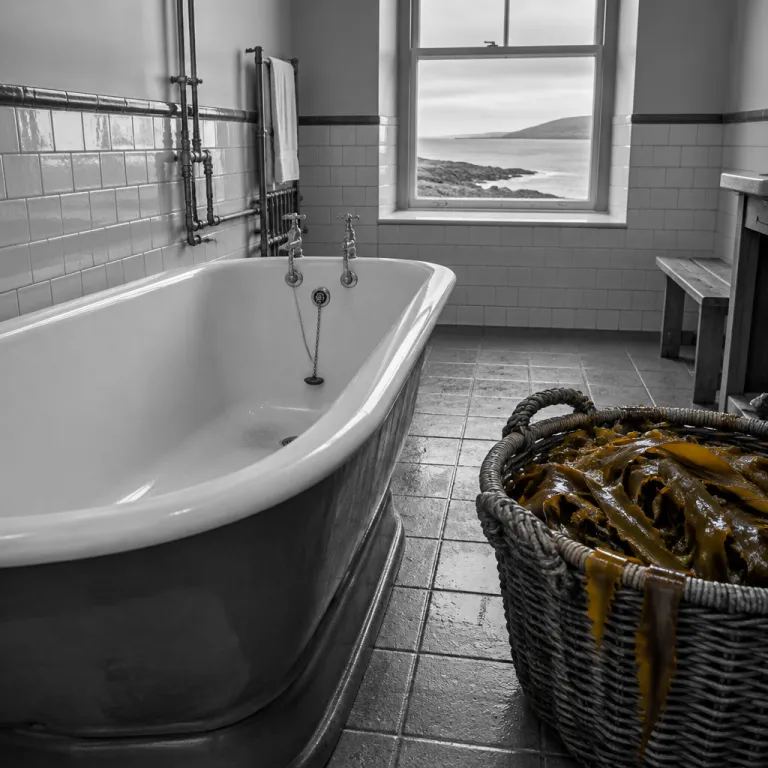
From Victorian cure to wild Atlantic ritual
Step into a seaweed bath on Ireland’s Atlantic coast and you step into a story that predates the language of wellness. Along this shoreline, where the wild ocean shapes every inlet, seaweed bathing evolved from a pragmatic cure for aching fishermen into a quiet ritual that still anchors coastal life. The experience feels both elemental and surprisingly refined, especially when framed by a serious hotel spa or a carefully restored bathhouse.
By the late nineteenth century, contemporary reports suggest that more than 300 dedicated baths operated along the western seaboard of Ireland, using hot seawater and freshly gathered Atlantic kelp to ease joints and soothe skin. Many closed as foreign travel and modern medicine shifted habits, yet a handful of families in County Sligo and beyond kept the faith with traditional seaweed baths and simple steam rooms. Their persistence laid the groundwork for today’s seaweed baths Ireland luxury spa landscape, where heritage and contemporary design now sit comfortably side by side. (Source: Irish Folklore Commission archives and local tourism records, Sligo County Council)
The Kilcullen family in Enniscrone represent that unbroken thread, with Kilcullen Seaweed Baths operating continuously as a coastal landmark in County Sligo since 1912. On another stretch of Strandhill shoreline, the Walton family revived a ruined bathhouse in the early 2000s and created VOYA Seaweed Baths, later building the global Voya seaweed skincare line from the same coastal algae they had always harvested. As Mark Walton has noted in interviews, “we wanted to keep the old bathing ritual alive, not just bottle the ingredients.” This is the context in which any modern hotel or hotel spa must now position its spa treatments and spa treatment menus, because guests increasingly seek the real Irish seaweed bath ritual rather than a themed add on.
How a serious seaweed bath should feel
A genuinely good seaweed bath begins long before you lower yourself into the tub, and it starts with the water and the seaweed rather than with scented candles. Traditional bathhouses and the best hotel spa teams insist on hot seawater, not just heated tap water with salt added, because the mineral profile and buoyancy change the entire bathing sensation. When the tub is drawn correctly, the water looks almost tea coloured from the organic seaweed, and the first touch feels silky rather than oily.
Freshly hand harvested fronds from the Atlantic coast are the non negotiable ingredient, whether you are in Strandhill, Enniscrone, Barna or another wild bay. The ribbons unfurl in the hot water, releasing alginates that give the bath its signature slip and its reputation for easing tight muscles after long drives between counties. Many guests now arrive already familiar with Voya seaweed products or other Irish marine skincare, yet the live plant in the tub remains a different order of experience from any bottled spa treatments.
Operators who take seaweed bathing seriously often pair the tub with a short steam session, allowing pores to open before you slide into the bath itself. Some coastal baths in Ireland still use porcelain enamelled tubs and individual steam boxes, while newer hotel spa facilities integrate seaweed bathing into thermal circuits with saunas and hot springs style vitality pools. For a deeper dive into how these spaces are designed, our guide to spa hotels in Ireland with outdoor seaweed baths maps the properties that give this ritual proper space and time.
Where heritage meets hotel spa architecture
Along the western seaboard of Ireland, the most interesting seaweed baths now sit at the junction of old world bathhouse culture and new wave hotel spa design. In Strandhill, the Voya Seaweed Baths building keeps its modest village scale, yet its influence reaches into hotel spa menus from Galway city to Dublin, where Voya seaweed based spa treatment options now signal a certain Irish authenticity. The key is whether the property offers a full immersion experience on site or simply imports seaweed products into generic spa treatments.
In County Sligo and neighbouring counties, you will find stand alone baths Ireland institutions operating beside contemporary hotels, each with different strengths for the solo explorer. A dedicated bathhouse may offer more traditional steam boxes and a briny, no nonsense atmosphere, while a luxury hotel will wrap the same seaweed bathing ritual in relaxation rooms, thermal suites and attentive service. Both models can work, provided the seaweed, the water and the bathing sequence remain faithful to the ritual rather than to trend driven spa language.
Further south and west, properties near Barna, Connemara and other wild Atlantic inlets are quietly building seaweed baths into broader thalassotherapy inspired circuits. Here you might move from a hot vitality pool to a cold plunge, then to a private seaweed bath, before resting in a stone lined relaxation room that frames the ocean through floor to ceiling glass. For a deeper look at this design led movement, our feature on the quiet architecture of Ireland’s new spa hotels explores how river stone, sea views and restrained lighting now shape the country’s most thoughtful hotel spa spaces.
Planning a seaweed baths Ireland luxury spa escape
For a solo traveller, the most rewarding way to approach seaweed baths in Ireland is to treat them as the anchor of a short coastal retreat rather than as a quick add on. Start by choosing a county that suits your rhythm, whether that is County Sligo with its surf breaks and long strands, or County Galway with its mix of Galway city energy and quieter Barna and Connemara seaweed rich bays. Your ideal location will balance easy access to a respected bathhouse or hotel spa with enough nearby walking routes and dining options to fill the spaces between treatments.
In Strandhill, a seaweed bath can bookend a day that begins with a beach walk and ends with a casual seafood supper, while in Enniscrone the Kilcullen Seaweed Baths sit close to dunes and long, flat sands that invite slow evening strolls. Around Galway city, several hotels now pair spa treatments based on organic seaweed with access to coastal paths, allowing you to move from Atlantic spray to hot tubs and back again. Typical sessions last 45–60 minutes and, at the time of writing, often cost from €35–€60 for a single bath, with higher rates for packages that include massages or access to full thermal suites. Whichever location you choose, book your seaweed bathing slots early, especially in summer when baths Ireland wide can be fully reserved days in advance.
To deepen the restorative effect, consider timing your seaweed bath after a long drive or a cold water dip, when muscles are already primed to respond to the hot water and marine plants. Many guests report that “Relieves skin conditions, muscle aches, boosts circulation” is not just brochure language but a fair summary of how they feel stepping out of the tub. If you enjoy pairing wellness with gastronomy, our feature on Irish hotels where autumn means tastings by the fire suggests properties where a measured whiskey flight by the hearth can sit comfortably alongside a day of spa treatments.
Seasonality, cold water and what to look for
While seaweed baths operate year round in Ireland, winter and the shoulder seasons often deliver the most powerful experiences for solo travellers. Shorter days and colder Atlantic winds make the contrast between icy beach walks and hot seaweed bathing especially vivid, and the quieter pace in many coastal towns means more time to linger in relaxation rooms. You will also find that hotel spa teams have more space to personalise spa treatment sequences when the property is not at full summer capacity.
Cold water culture now frames much of the conversation around Atlantic wellness, from informal swims off piers to structured immersion sessions offered by some hotels. A seaweed bath sits comfortably within this movement, acting as the warming counterpoint to a bracing dip in the ocean or a plunge pool that mimics natural hot springs and cold streams. The alternation between cold water and hot, mineral rich seaweed baths seems to amplify circulation benefits, especially when combined with gentle walking along the wild Atlantic coastline.
When assessing any seaweed baths Ireland luxury spa option, ask direct questions about the source of the water, the freshness of the seaweed and the duration of each bath. Serious operators will be transparent about harvesting coastal seaweed locally, about drawing fresh hot seawater for every guest, and about allowing enough time in the tub for the organic seaweed to release its full potential. Whether you are in a simple bathhouse or a polished hotel, those details will tell you more than any brochure about how deeply the property respects Ireland’s oldest wellness ritual.
FAQ
What are the main benefits of an Irish seaweed bath ?
Traditional Irish seaweed baths use hot seawater and fresh Atlantic seaweed to ease muscle tension, support circulation and soften the skin. The alginates released by organic seaweed create a silky texture that many guests find deeply relaxing after long drives or coastal hikes. For some travellers, regular seaweed bathing also helps manage dry skin and mild joint stiffness, though it is not a substitute for medical treatment.
How should I prepare for a seaweed bath session ?
Arrive well hydrated, avoid heavy meals immediately beforehand and bring swimwear if you prefer not to bathe nude. Many bathhouses and hotel spa facilities recommend a brief shower or steam before entering the tub, which helps the skin absorb more from the hot water and seaweed. If you have cardiovascular issues, low blood pressure or are pregnant, speak with your doctor and the spa team before booking.
Is there a difference between bathhouse and hotel spa seaweed experiences ?
Dedicated coastal bathhouses in Ireland tend to focus almost entirely on the seaweed bath itself, often using traditional tubs and simple steam boxes. Hotel spa settings usually integrate seaweed baths into wider spa treatments, adding saunas, relaxation rooms and sometimes pools that evoke hot springs. Both can be excellent, but the key is fresh seaweed, clean hot seawater and enough time in the bath to feel the full effect.
Do I need to book seaweed baths in advance ?
Advance booking is strongly recommended, especially along the wild Atlantic coast in peak travel months. Popular locations such as Strandhill, Enniscrone and areas near Galway city often run at full capacity during weekends and holidays. Reserving ahead also allows you to coordinate seaweed bathing times with other activities like coastal walks, dining reservations or additional spa treatments.
Can I buy seaweed products to continue the ritual at home ?
Many bathhouses and hotels that offer seaweed baths also retail seaweed products such as bath sachets, body oils and skincare created from Atlantic seaweed. Brands like Voya seaweed have grown directly from Irish bathhouse traditions and now appear in hotel spa boutiques across Ireland and abroad. While home baths cannot fully replicate hot seawater and the coastal atmosphere, they can extend some of the sensory and skin care benefits between trips.