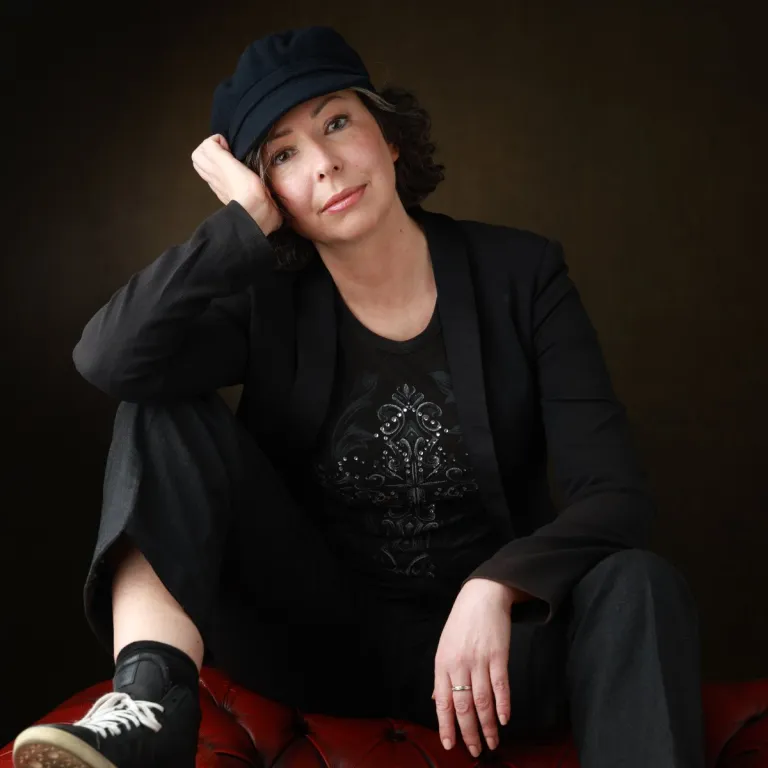
Nicole, you left a secure job at RTÉ lyric fm in the middle of the Lehman Brothers collapse to found Pandora Bell. How did that leap of faith shape your personal definition of ‘excellence’ in Irish artisan confectionery, and what did you want Pandora Bell to prove about what Ireland could do in this field?
The timing of opening Pandora Bell was simply the moment in life that I was ready to branch out on my own. The global situation was obviously not in my favour but there would have been no benefit to waiting and I think the world keeps on turning even after a large scale event.
. I think if you are going to put your heart and should into a business a belief in what you are creating pushes you forward every day. As a small business you need to strive for excellence. Without massive economies of scale you cannot compete on price. But where I chose to find a niche was on quality, design, and on flavours etc. With Pandora Bell I chose classic confectionery that was not readily available on the Irish market and aimed to introduce a range of classics at a ‘top tier’. Excellence was just part and parcel of that vision.
You trained in English and History of Art and later in culinary schools across Europe. How do literature, visual art and European gastronomic traditions concretely influence the way you design a nougat, a pâte de fruit or a salted butter caramel at Pandora Bell?
Literature allows us all the chance to dream and sometimes to find a more idealised world than the one that we live in. The story that I created of Pandora Bell comes from the sense of an idealised past where a woman went and did the great Grand Tour of Europe as centuries of gentlemen did before her.
A timeless sense of beauty and tradition was what influenced the packaging design, so that the provenance and history of the recipe was reflected in the aesthetic. A visual sense is something that is difficult to quantify, but working with design and using that visual language I had built up over years of studying painting, sculpture and architecture was a real joy. Every product did not translate from the computer screen to the shelf as I would have imagined but we did a lot of refining over the years, that really is the essence of the job. I would see it in a similar way to watching the evolution of the history of architecture. Early Greek temples are clumpy and heavy and each generation improves on this until you peak with a building like the Pantheon in Athens.
Traditional food is really what interests me in the food world. The countries that kept their traditions have staved off the curse of ultra processed foods and are healthier now as a result. Family recipes that have been passed down through generations using hand methods are fascinating and they bring a mystery and a story to every bite. Again it is a tweaking and a refining through generations not a constant reinventing that makes great food. Our world is moving so fast now that we have lost a lot of this steadiness.
Pandora Bell works with artisan confectioners across Europe yet is rooted in Limerick and Irish identity. What, in your view, makes Irish artisan confectionery distinctive, and how do you balance Irish terroir and storytelling with French, Italian or Spanish know‑how in the finished sweets?
The Irish terroir really comes from being firmly personally rooted in Ireland and having a strong grounding in our own culinary tastes. I have also over the years produced ranges of traditional boiled sweets which are part of the Irish confectionery tradition. I really enjoyed hearing feedback on these especially from elderly people who have so many stories and memories about these sweets.
In general I think that mainland Europe had a stronger confectionery tradition than we ever did but that is probably part of our colonial history. I am very proud to be from Limerick the home of the Cleeves Toffee Factory, I often walk past it and imagine what it would have been like in it’s working grandeur.
Your range spans honey nougat, real fruit jellies, eggshells filled with praline, and old‑fashioned salted butter caramels with fleur de sel. Could you take one or two of these products and walk us through the standards, techniques or sourcing choices that, for you, turn a ‘good’ sweet into an ‘excellent’ one?
The Honey Nougat was part of the initial Pandora Bell range that was launched back in 2009.
This is a very special product. The Almond and Pistachio bar has won two stars (twice) at the UK Great Taste Awards.
Firstly texture and flavour is what draws me in, and this nougat has a really lushious mouthfeel; it’s secret ingredient is cocoa butter. It is a soft nougat which allows a contrast between the nuts and the nougat itself. After falling in love with the product I got to know the family who invented the recipe in the 1850’s which went on the become an Italian Christmas tradition. I work still with members of this family. Quality plus magic plus provenance is a good combination.
Pandora Bell has won Great Taste Awards, a SIAL innovation prize in China, and caught the eye of houses like Dolce & Gabbana and Vivienne Westwood. Beyond the prestige, what have these international recognitions taught you about how Irish artisan confectionery is perceived abroad, and has that feedback changed the way you create?
To be honest, I don’t believe Ireland has a strong presence on the luxury end of the market for confectionery. There are some excellent UK and French brands who have a good global presence. They have enough scale to be able to keep their prices within export ranges, and enough longevity as ‘houses’ to establish abroad. European food is really well respected globally but there are really only a certain amount of brands that are truly international but also have the quality to back that up. It is important to have a well developed luxury market in your home country. This is something we don’t have unfortunately and I do believe it holds the industry back. Somewhere like Avoca is just vital for luxury brands and we have lots of small interesting shops around the country also, and that is wonderful, but we are a small country so that area of the food offering could be better. If the home market was stronger and you had a better Farm shop and department store network, I think yes brand Ireland could do as well as France, the UK or Belgium.
The brand started as a fictional 1920s traveller on an Irish steam train and is now present from the US to the Middle East. Looking ahead, how do you see Irish artisan confectionery evolving over the next decade in terms of flavour trends, sustainability, and the tension between small‑batch excellence and global demand?
Health and sustainability are trends that are now so fundamental to the food industry that they are really not even trends anymore. Pandora Bell was founded (pre trend) to bring sweet things back to basics when they were made with good ingredients and belonged in a kitchen not a science lab. We have built an ethos rather than constantly trying to follow the next trend. I think in the ‘trendy versus timeless’ debate we come down very much on the side of timeless. So yes it is tempting to get into a whirl about trends and pistachio chocolate and GLP1 and whatever is happening.. but quality and timelessness are the real core values in a ‘trend’ driven world.
For readers who dream of becoming their own ‘confectionery queen or king’, what honest advice would you share about building a truly excellent artisan confectionery brand from Ireland—both the romantic side and the hard realities they should be prepared for?
I started Pandora Bell in the recession post 2008 which to many might seem like a very difficult time to start a business, but it did have some positives to it. I kept my investment small and focussed. I did not have a big facility or a fleet of vans on the road. I used a lot of external partners. This kept costs down. I also found at the time that people and the media were very positive about supporting an Irish brand, that was so important. Also at this time prices remained stable so I could rely on keeping a steady RRP.
Since Brexit, wars, global cocoa price rises, sugar price rises, transport costs, wages going up etc etc it has become much more difficult. I would advise anyone starting out to look for gaps in the market but to really think about what would happen if we got another price shock would you be able to cope with it. And also reach out for help and support to as many people in the industry as you can. They are a lovely bunch of people and always willing to give advice. Good luck!
Learn more: https://pandorabell.com